
A cash-out refinance lets you access equity from a property by refinancing and increasing the loan amount.
That equity might be used for renovations, an investment deposit, debt consolidation, a car, business costs, school fees, or a cash buffer.
Cash-out is not automatically bad. It is your property, and if you have equity and can service the loan, there may be options.
But cash-out is not automatically smart either.
The core question is:
What are you using the money for, and will the higher loan put you in a better or worse position?
For the broader refinance process, read the refinance home loan Sydney playbook. If the property is an investment, read the investment property refinance guide as well.
Planning to buy property in Dubai?
An Australian equity review and a Dubai property purchase are separate decisions. NewGen can review your Australian loans and explain the options available for your circumstances. The Broker Josh handles the property, price, condition, and purchase process in Dubai.
See how the two services are kept separate.
What is a cash-out refinance?
A cash-out refinance means refinancing your existing loan and increasing the new loan amount so part of your equity becomes available as funds.
For example:
- Property value: $1,000,000.
- Current loan: $600,000.
- New refinance loan: $750,000.
- Potential cash-out before costs: $150,000.
The lender still needs to approve the higher loan. You still need enough equity. You still need to service the repayment. The lender will usually ask what the funds are for.
Common reasons borrowers request cash-out
Cash-out may be requested for:
- Renovations.
- Investment property deposit and costs.
- Debt consolidation.
- Business costs.
- Car purchase.
- Education or school fees.
- Medical or family expenses.
- Emergency buffer.
- Personal or lifestyle purposes.
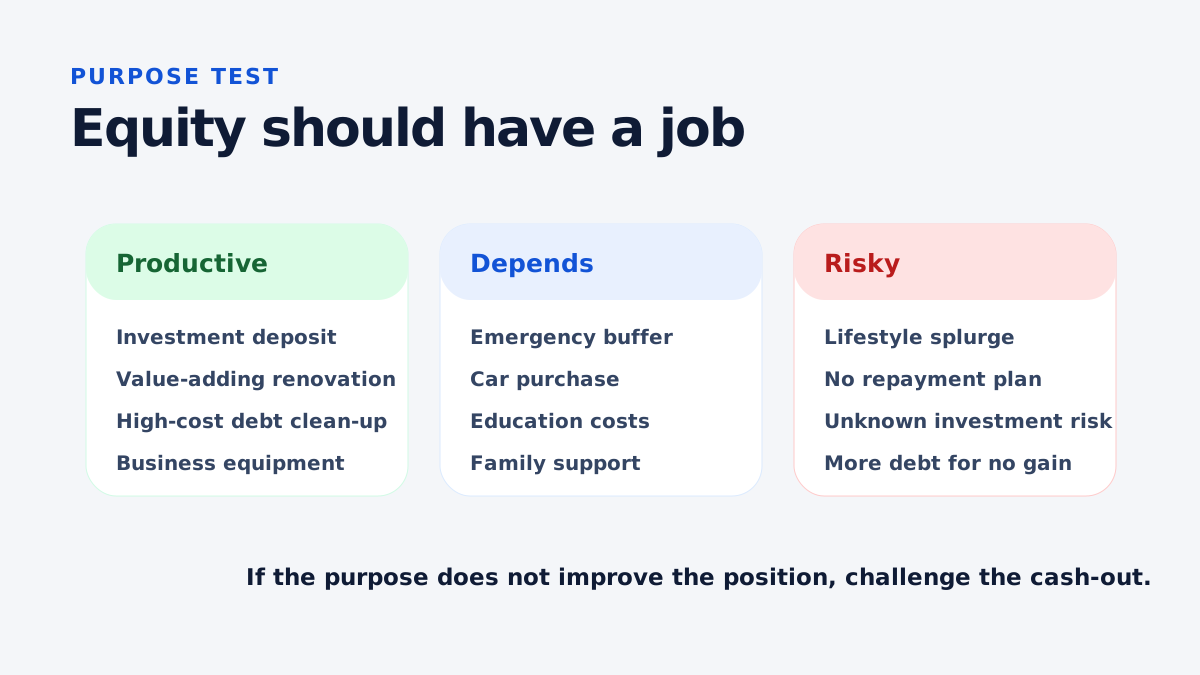
Productive purposes are usually stronger. Renovations may improve the asset. An investment deposit may help build wealth. Debt consolidation may reduce pressure if paired with repayment discipline.
Using equity for wasteful spending is different. That increases the debt without improving the position.
How usable equity is calculated
Total equity is not the same as usable equity.
Total equity is:
Property value - Current loan balance
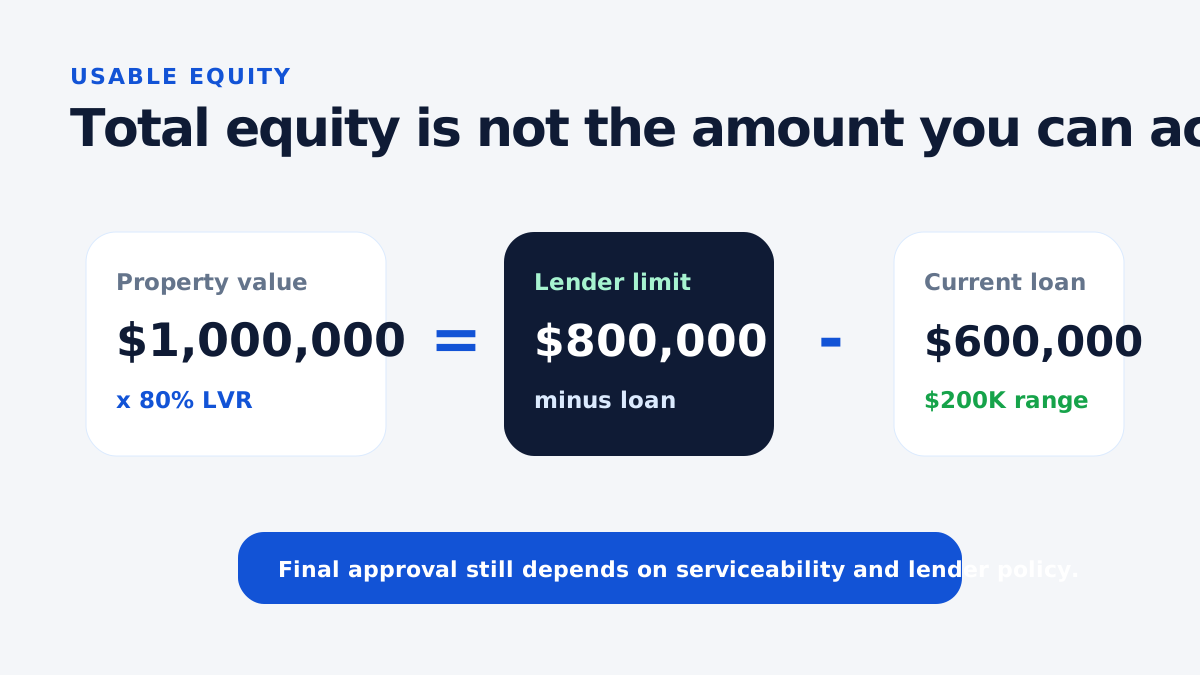
Usable equity is the amount a lender may allow you to access while staying within its LVR, policy, and serviceability limits.
Many cash-out plans start with an 80% LVR estimate:
| Item | Amount |
|---|---|
| Property value | $1,000,000 |
| 80% of property value | $800,000 |
| Current loan balance | $600,000 |
| Potential usable equity before costs | $200,000 |
That does not mean you should take the full amount. It only gives a planning range before lender policy and affordability are tested.
What lenders check
Lenders usually assess:
- Property value.
- Current loan balance.
- Requested new loan amount.
- LVR.
- Income and employment.
- Living expenses.
- Existing debts and credit limits.
- Credit history.
- Repayment conduct.
- Purpose of funds.
- Supporting evidence for larger requests.
- Property type and location.
Purpose matters. “I just want money” may not be enough, especially for larger cash-out amounts.
Clearer purposes include:
- $80,000 for kitchen and bathroom renovations.
- $120,000 for investment property deposit and costs.
- $45,000 to consolidate credit card and car loan debt.
- $60,000 for business equipment.
- $30,000 as a documented cash buffer, subject to lender appetite.
Cash-out for renovations
Renovation cash-out can make sense when the work improves lifestyle, rental return, or property value.
The lender may ask for more detail depending on amount and project type.
| Renovation type | Likely evidence |
|---|---|
| Cosmetic upgrades | Purpose explanation and budget may be enough with some lenders |
| Kitchen or bathroom renovation | Quotes, scope, or builder estimate may be requested |
| Major extension or structural work | More detailed assessment or construction-style funding may be needed |
The bigger the project, the more important the funding sequence becomes.
Cash-out for investment
Using equity for investment is often one of the stronger reasons to request cash-out.
The funds may be used for:
- Investment property deposit.
- Purchase costs.
- Renovation of a rental property.
- Other income-producing investments.
Loan splits are important here. The ATO’s interest expenses guidance says deductibility depends on what the borrowed funds are used for and that private-use portions cannot be claimed.
If cash-out is for investment, keep the purpose clean and speak with an accountant.
Cash-out for debt consolidation
Cash-out can also be used to consolidate debt.
For example, a borrower may refinance and pay out:
- Credit cards.
- Personal loans.
- Car loans.
- Buy now pay later balances.
- Business debts.
This can reduce monthly repayments, but it is not automatically a win. Moneysmart’s debt consolidation and refinancing guidance says to compare the new rate, fees, costs, and affordability against current loans. It also warns that a longer loan term can cost more in interest and fees over time.
The main risk is rolling short-term debt into a long mortgage, then rebuilding the short-term debt again.
If the behaviour does not change, the borrower can end up with a larger mortgage and new unsecured debt later.
When cash-out may be a bad idea
Be careful when:
- Income is unstable.
- The new repayment is uncomfortable.
- The purpose is vague.
- The borrower is using equity to fund lifestyle spending.
- Debt consolidation is not paired with a repayment plan.
- The borrower does not understand the investment risk.
- The cash-out pushes the LVR into a weaker policy or pricing band.
Cash-out should help build, protect, or restructure the financial position. If it only creates more debt, push back.
Worked example: renovation and investment
| Item | Amount |
|---|---|
| Current property value | $1,200,000 |
| Current loan balance | $700,000 |
| 80% LVR planning limit | $960,000 |
| Potential usable equity before costs | $260,000 |
The borrower might request:
| Purpose | Amount |
|---|---|
| Renovation funds | $80,000 |
| Investment property deposit | $150,000 |
| Buffer and costs | $30,000 |
| Total cash-out requested | $260,000 |
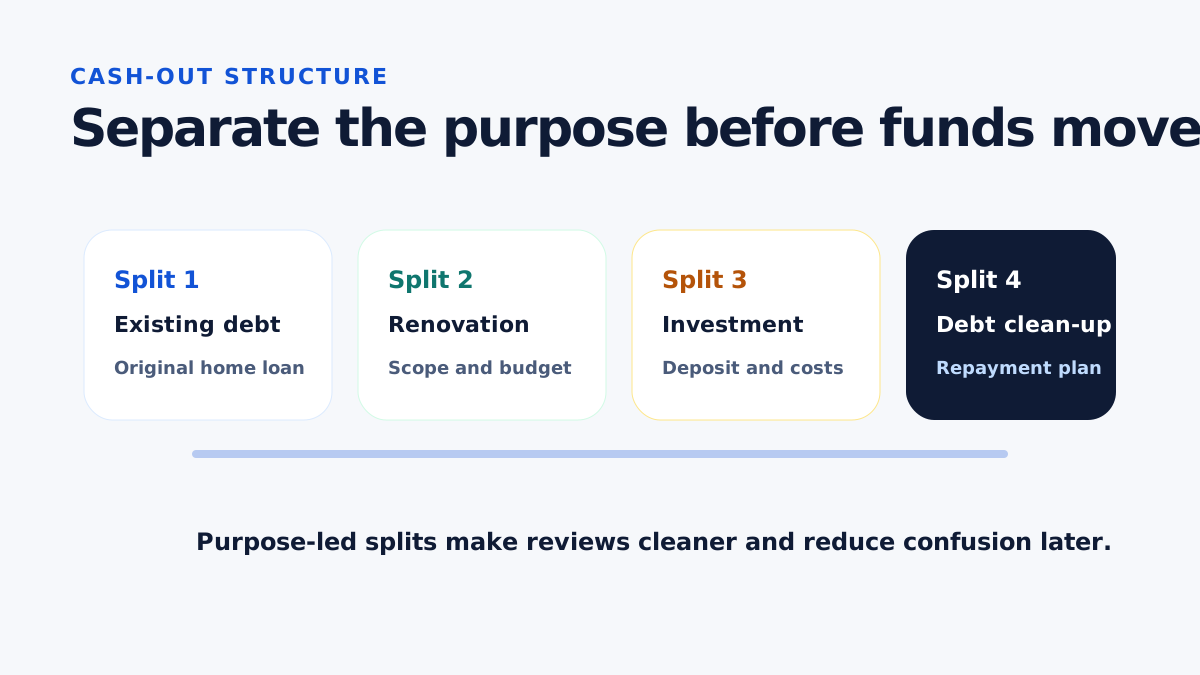
This may work if the borrower can service the higher loan and the lender accepts the purpose. But the structure should be clean:
- Split 1: existing home loan debt.
- Split 2: renovation funds.
- Split 3: investment deposit funds.
That makes tracking and review easier.
Seven-day cash-out action plan
- Estimate current property value and loan balance.
- Calculate a rough usable equity range.
- Decide the exact purpose of funds.
- Check whether the purpose should be separated into loan splits.
- Get tax advice if any funds relate to investment or mixed purposes.
- Test the new repayment, not just approval.
- Use start enquiry if you want lender-fit options mapped before applying.
Final word
Cash-out refinance can be useful when it has a clear purpose and the higher loan remains affordable.
It is weakest when the borrower accesses equity simply because it is available.
Equity should be used with intent. If the cash-out does not improve the property, investment position, cash flow, or debt structure, the refinance needs a stronger reason.