
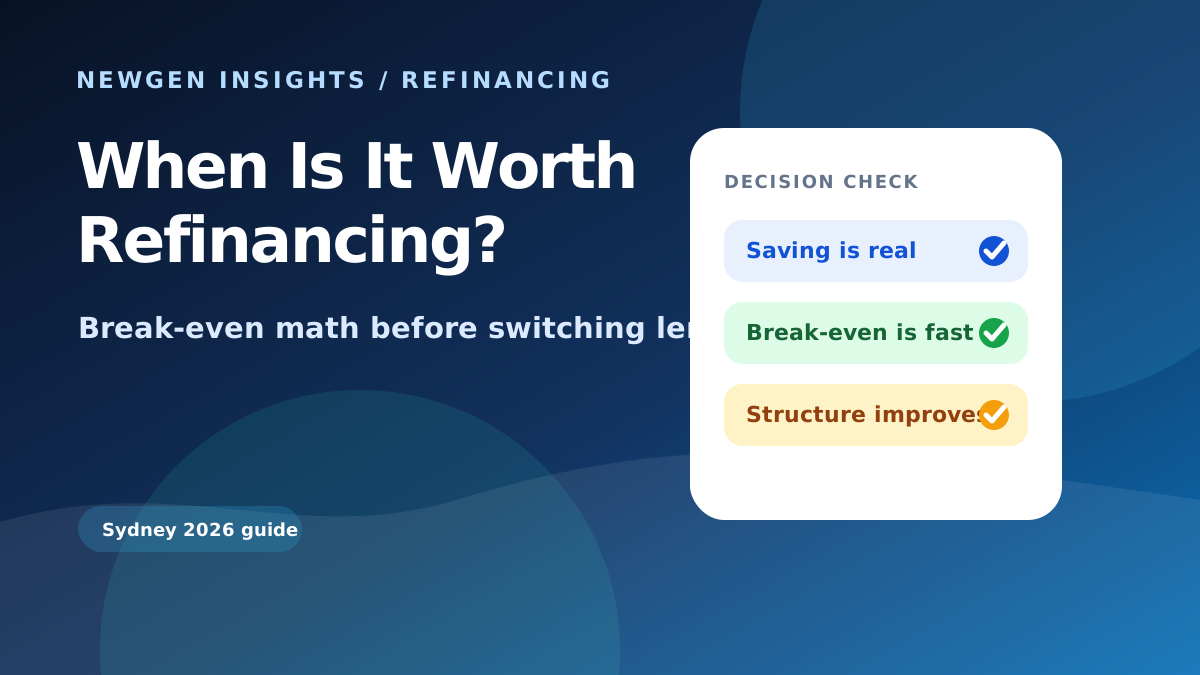
Refinancing can be smart.
It can also be unnecessary.
The problem is that most borrowers hear about a lower rate and immediately frame the decision as “should I switch banks?” That is too narrow. A refinance should improve the position after fees, loan features, timing, valuation risk, and the hassle of moving lenders are included.
For the full refinance framework, start with the refinance home loan Sydney playbook. This article focuses on the decision point: when is refinancing actually worth it?
If a Dubai property is part of the plan, separate that purchase from the Australian refinance decision. See what NewGen handles and what The Broker Josh handles.
The fast answer
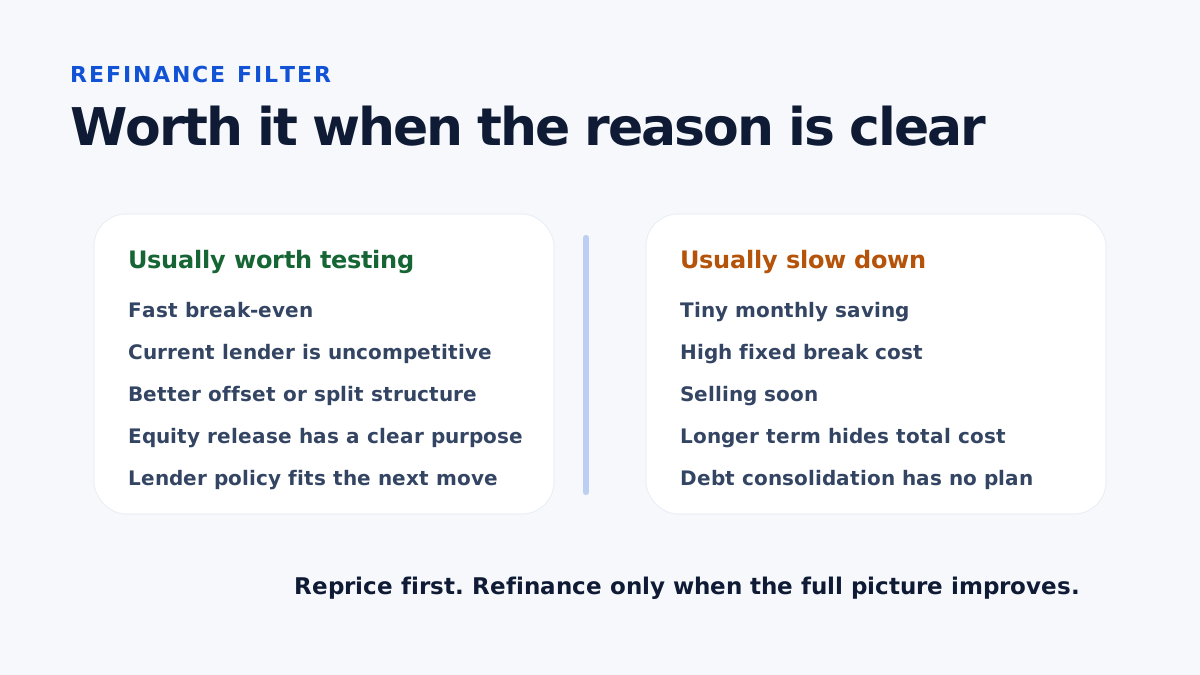
Refinancing is usually worth reviewing when at least one of these is true:
- Your current lender is materially more expensive than realistic alternatives.
- Your repayments are becoming uncomfortable and a new structure may help.
- The refinance pays back switching costs within a sensible period.
- You need features your current loan does not provide.
- You need to access equity for a clear purpose.
- You need to separate debt, consolidate debt, or change repayment type.
- Your current lender cannot support the next stage of your plan.
It is usually weaker when the saving is tiny, break costs are high, the new loan has worse features, or you plan to sell soon.
The first thing to check before switching lenders
Before a full refinance, check whether the current lender will reprice the loan.
Repricing means asking the lender to improve the rate or package without moving the loan to another bank. It can be faster than refinancing because there is usually no new settlement, no discharge, and less paperwork.
Repricing is not always enough. Some lenders only reduce the rate slightly. Some borrowers need a product feature, policy outcome, or equity release that the current lender will not support. But repricing is a useful first filter because it tells you how hard your current lender is willing to fight for the loan.
If repricing closes most of the gap, the full refinance may not be worth the admin. If repricing is weak, then a lender comparison is justified.
The break-even formula
Break-even is the point where the monthly savings recover the cost of switching.
The simple formula is:
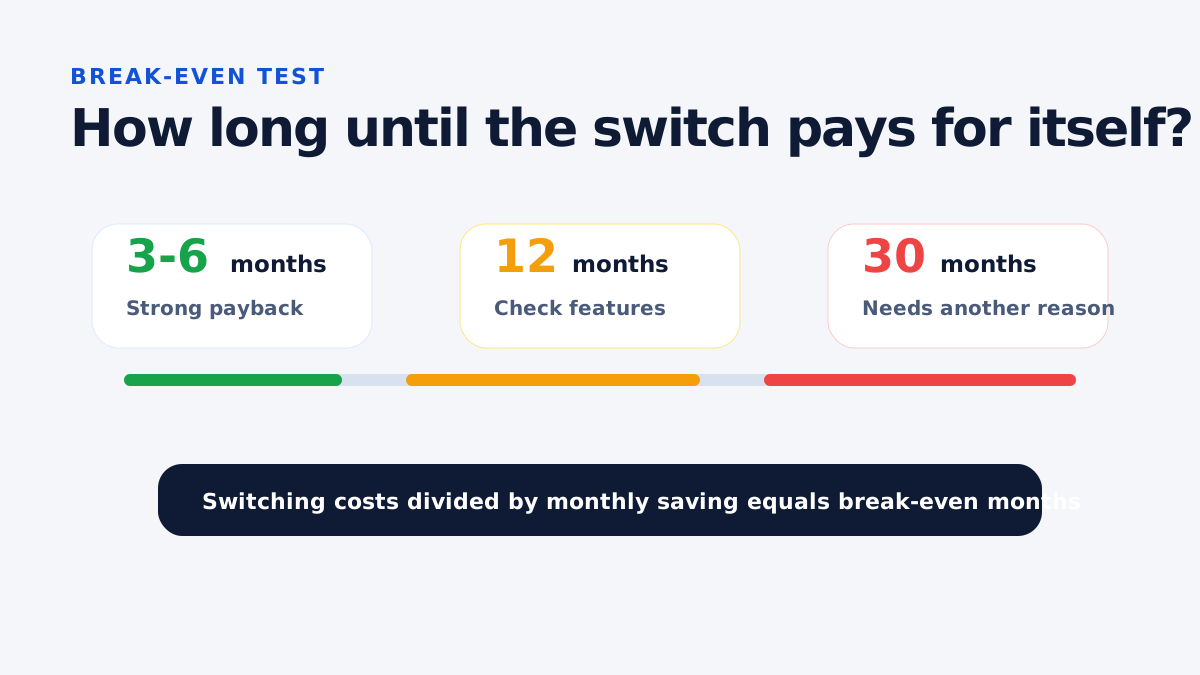
Total refinance costs / Monthly repayment saving = Months to break even
| Refinance item | Example amount |
|---|---|
| Discharge, application, valuation, settlement and other costs | $1,500 |
| Monthly repayment saving | $300 |
| Break-even time | 5 months |
Now compare that with a weak saving:
| Refinance item | Example amount |
|---|---|
| Total refinance costs | $1,500 |
| Monthly repayment saving | $50 |
| Break-even time | 30 months |
The second refinance is not automatically wrong, but the reason needs to be stronger than “the rate is slightly lower.”
Moneysmart provides a mortgage switching calculator to compare switching costs, repayment differences, and how long it may take to recover the cost of changing loans. Use that as a screening tool, then check the loan structure properly.
Why the old 2% rule is too rigid
Some borrowers use the “2% rule.” That means they only refinance if the new rate is at least two percentage points lower than the existing rate.
That rule is too blunt for 2026.
A two percentage point gap is large. If a borrower waits for that exact gap, they may ignore a refinance that would still save money, improve structure, or reduce risk. A smaller gap can be worth it when the balance is large, fees are low, and break-even is fast.
A bigger gap can still be weak when:
- Fixed-rate break costs apply.
- The new loan has higher annual fees.
- The borrower loses an offset account they actively use.
- The loan term resets and increases lifetime interest.
- Valuation risk could push the loan into a worse LVR band.
- The new lender’s policy does not fit the borrower’s next move.
The better rule is: calculate break-even, compare features, then check whether the refinance supports the next two to five years.
When refinancing is worth it
Your current repayments are too tight
If the repayment has become hard to manage, review the loan. A refinance may improve cash flow through a lower rate, different repayment type, longer remaining term, or debt restructure.
That does not mean every repayment-pressure file should refinance. Extending the loan term can reduce monthly pressure but increase total interest. The trade-off needs to be explicit.
Your current bank has become uncompetitive
Some borrowers stay with one lender for years and do not notice the loyalty gap. If your lender is giving sharper pricing to new customers while your existing loan sits high, repricing or refinancing should be checked.
The refinance breaks even quickly
If the refinance is mainly about savings, the break-even should be clear. A five-month break-even is very different from a 30-month break-even.
You need better features
Rate is only one part of the loan.
Features can matter when you need:
- Offset account access.
- Redraw flexibility.
- Extra repayment flexibility.
- Split fixed and variable structure.
- Interest-only options.
- Cleaner online banking and account visibility.
- Better lender service.
- More suitable policy for future equity release.
A slightly higher rate can sometimes be better if the features create real value.
You want to access equity
Cash-out or equity release can be valid when the purpose is clear. Common reasons include renovations, an investment deposit, debt consolidation, or business funding.
If equity release is the main reason, read the cash-out refinance guide before applying.
When refinancing is not worth it
Refinancing is not worth it just because a lender advertises a lower headline number.
Be careful when:
- Monthly saving is too small.
- Switching costs are high.
- Fixed break costs apply.
- You plan to sell soon.
- The new lender removes features you use.
- The new loan term hides lifetime interest cost.
- You are consolidating debt without changing repayment behaviour.
- Your income, expenses, or credit file are weaker than before.
Moneysmart’s switching home loans guidance warns borrowers to compare rates, features, fees, and the effect of a longer loan term before moving. That is the right mindset.
Worked Sydney refinance example
Assume a Sydney borrower has a $750,000 loan.
| Item | Current loan | New loan |
|---|---|---|
| Loan balance | $750,000 | $750,000 |
| Monthly repayment | $4,850 | $4,420 |
| Monthly saving | $430 | |
| Estimated refinance costs | $1,720 | |
| Break-even point | 4 months |
This refinance is worth testing because the payback is quick.
Now compare a weaker version:
| Item | Current loan | New loan |
|---|---|---|
| Loan balance | $750,000 | $750,000 |
| Monthly repayment | $4,850 | $4,760 |
| Monthly saving | $90 | |
| Estimated refinance costs | $1,720 | |
| Break-even point | 19 months |
The second one may still work, but it needs another reason: better features, better service, or a structure that supports the next plan.
Hidden costs that change the result
Annual package fees
A lower advertised rate can be offset by package fees, account fees, or valuation costs.
Fixed-rate break costs
If you are leaving a fixed-rate loan early, break costs can change the whole result. Get a payout figure before assuming the refinance is profitable.
LMI or valuation surprises
If the valuation comes in lower than expected, the loan-to-value ratio may be higher than planned. That can affect pricing, lender choice, or LMI.
Longer loan term
A refinance back to a fresh 30-year term can reduce the monthly repayment while increasing lifetime interest. Moneysmart’s debt consolidation and refinancing guidance also warns borrowers to be cautious with longer terms because the lower repayment can cost more over time.
The question to answer before applying
Ask this before you submit an application:
What do I actually want from this refinance?
If the answer is “lower rate,” the break-even must be strong.
If the answer is “lower repayment,” check lifetime interest and repayment discipline.
If the answer is “cash out,” make sure the purpose is clear.
If the answer is “better structure,” check whether the current lender can do it before moving.
Seven-day refinance action plan
- Check your current rate, repayments, fees, remaining term, and loan features.
- Ask your current lender for repricing.
- Run the refinancing calculator.
- Estimate switching costs and break-even.
- Decide whether the refinance is rate-led, structure-led, or equity-led.
- Prepare clean loan statements, payslips, and liability evidence.
- Use start enquiry if you want a broker to test lender fit before applying.
Final word
Refinancing is worth it when the numbers and the structure both make sense. If the refinance only looks good because of a headline rate, slow down. If the break-even is fast, the features improve, and the lender fit is better, switching may be the right move.