
Refinancing an investment property is not the same as refinancing your own home.
The goal is usually different. The lender assessment is different. The rate can be different. The tax-purpose issues are different. The documentation can be heavier.
That does not make investment refinance bad. It can be one of the most useful lending reviews an investor does, especially when the refinance lowers repayments, improves cash flow, releases equity, or cleans up the loan structure.
But investors need to be deliberate. A messy refinance can create tax confusion, weak splits, cross-security problems, and future borrowing issues.
General information only: this guide is not tax advice. For deductibility, debt recycling, ownership, CGT, or investment structure advice, speak with a qualified accountant or tax adviser.
For the broader refinance sequence, read the refinance home loan Sydney playbook. If your main goal is equity release, also read the cash-out refinance guide.
Planning to buy property in Dubai?
Keep the Australian finance review separate from the Dubai property decision. NewGen can review your Australian lending position. The Broker Josh can help you assess the property and purchase process in Dubai.
Read the NewGen guide for Australian buyers.
Investment refinance vs owner-occupied refinance
An owner-occupied refinance is often about:
- Lower repayments.
- Better rate.
- Offset or redraw access.
- Debt consolidation.
- Changing repayment type.
- Better lender service.
An investment property refinance can include those points, but it often adds:
- Rental income and vacancy assumptions.
- Interest-only structure.
- Accessing equity for another property.
- Separating personal and investment debt.
- Tax-purpose record keeping.
- Portfolio serviceability.
- Avoiding unnecessary cross-collateralisation.
Why investors refinance
Lower the investment loan rate
Investment loans often price differently from owner-occupied loans. If the current lender has drifted higher than market alternatives, repricing or refinancing can improve cash flow.
Improve monthly cash flow
Cash flow matters for investors. A refinance can sometimes reduce repayments through pricing, interest-only structure, or a more suitable split.
Interest-only needs care. APRA’s current Residential Mortgage Lending guidance is aimed at prudent management of residential mortgage lending risks, including owner-occupied and investment properties. Lenders will still assess whether the borrower can handle the facility.
Access equity
Investors often refinance to access usable equity for another deposit, renovation, or portfolio step. The lender will want to understand the amount, purpose, LVR, repayment capacity, and whether the deal fits policy.
Clean up loan structure
This is a major reason to refinance. Investors often end up with:
- Private and investment debt mixed together.
- Redraws used for different purposes.
- One large loan where splits would be cleaner.
- Cross-collateralised security that reduces flexibility.
- Interest-only periods ending without a plan.
Refinancing can be a reset point.
What lenders usually check
For an investment property refinance, lenders may ask for:
- Current loan statements.
- Rental income evidence.
- Lease agreement or rental appraisal.
- Property valuation.
- Council rates and strata details.
- Landlord insurance or property expenses.
- Income documents.
- Tax returns if self-employed.
- Existing debt statements.
- Clear purpose for refinance or cash-out.
- Evidence for larger cash-out requests.
- Ownership and entity structure.
The file needs to make sense as a whole. A good rate is not useful if the lender does not like the rental income, property type, LVR, debt-to-income position, or cash-out purpose.
Rental income and serviceability
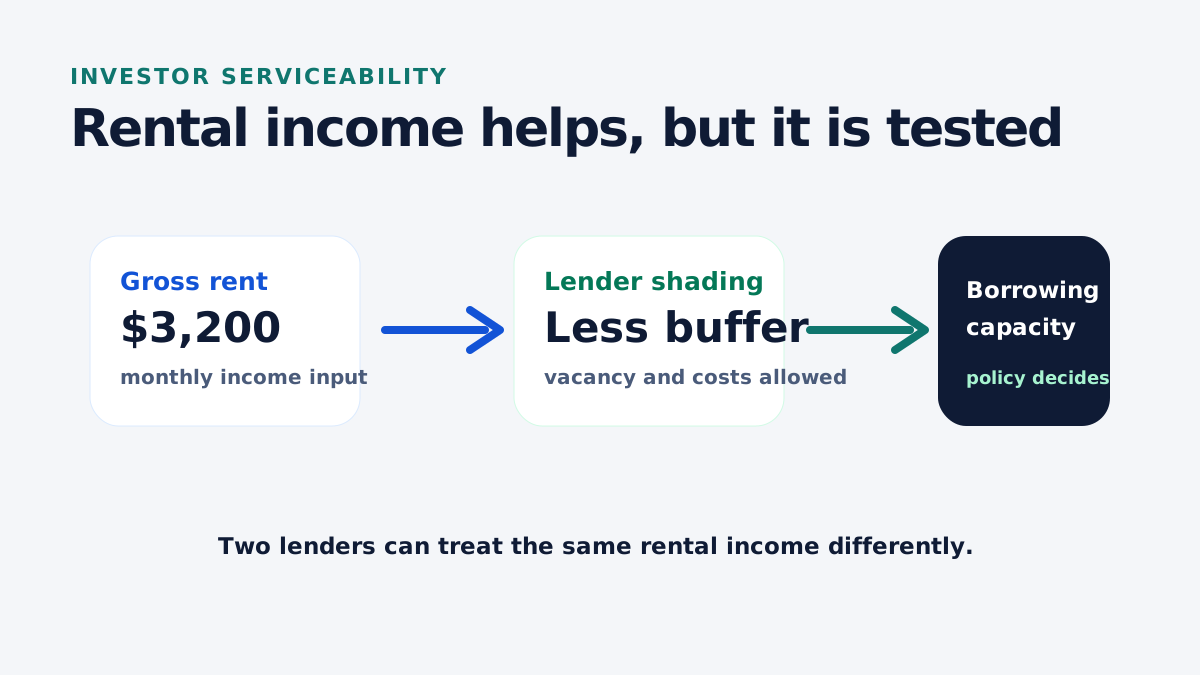
Rental income can improve borrowing capacity because it gives the lender another income stream to assess.
But the lender usually does not count every dollar of rent at full value. Rental income can be shaded for vacancy, management costs, maintenance, and conservative assessment. The exact treatment depends on lender policy.
This is why investor borrowing outcomes vary. Two lenders can look at the same rent, debt, and salary and produce different borrowing results.
The tax-purpose issue investors cannot ignore
For tax deductibility, the purpose of borrowed funds matters.
The ATO’s interest expenses guidance says interest can be claimed on loan funds used to buy a rental property, buy depreciating assets for the rental property, pay deductible expenses, or finance renovations and extensions to the rental property. It also says interest on private-use portions cannot be claimed.
That distinction matters in a refinance.
If you increase an investment loan and use the extra funds for a private car, holiday, or personal spending, the interest on that extra portion may not be deductible. If you mix private and investment purposes in one loan account, record keeping becomes harder.
Tax trap: mixing personal and investment debt
Here is a common problem:
- You refinance an investment property loan.
- You increase the loan by $80,000.
- You use $50,000 toward another investment.
- You use $30,000 for a personal car.
The loan now has mixed purposes.
The ATO’s apportioning rental interest expenses guidance says private expenses included in a rental property loan create an ongoing need to apportion interest for the life of the loan.
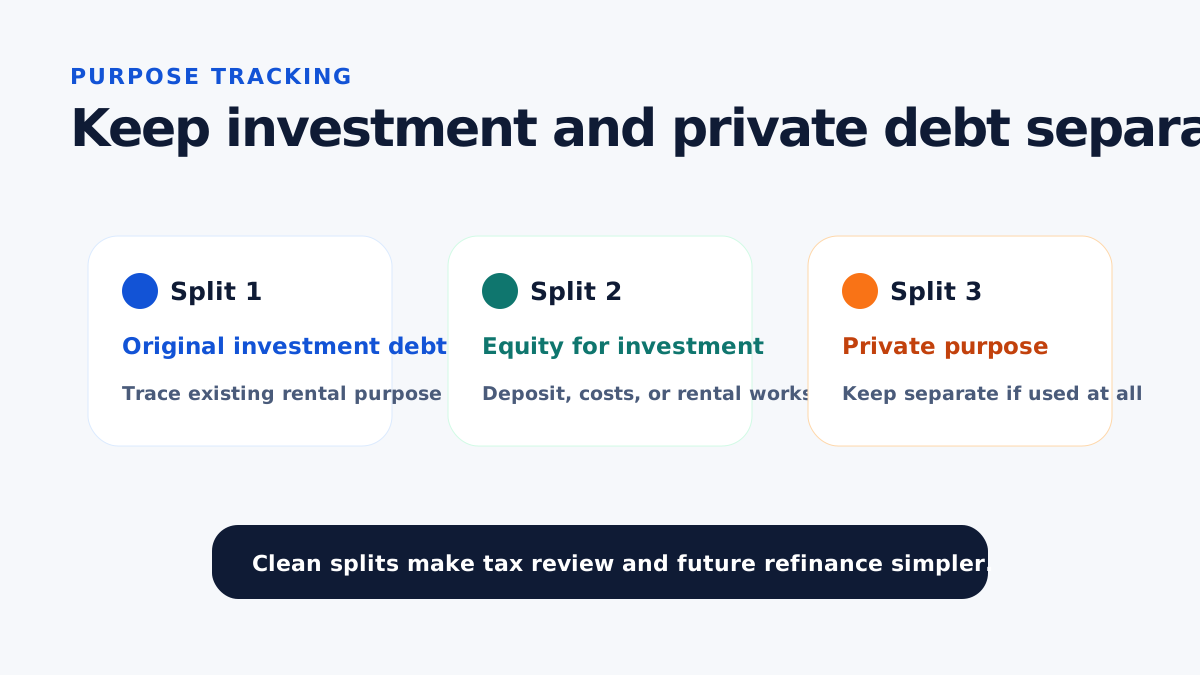
That is why clean splits are usually better:
| Split | Purpose | Why it helps |
|---|---|---|
| Split 1 | Existing investment debt | Keeps the original investment purpose clear |
| Split 2 | Equity release for investment | Easier to trace to the next income-producing purpose |
| Split 3 | Private purpose, if used | Keeps non-deductible purpose separate |
Speak with your accountant before relying on any deductibility assumption.
Debt recycling and equity release
Debt recycling is a strategy where non-deductible home loan debt is gradually converted into investment-purpose debt.
It can be useful, but it needs tax advice and disciplined loan structure. A refinance may help by creating separate splits, offset accounts, and a clean flow of funds. The key point remains the same: borrowed money needs a clear purpose and records need to support that purpose.
Six-year rule warning
The six-year rule is a capital gains tax concept, not a loan-approval rule.
It may be relevant when a former home becomes an investment property, but it should not be treated as lending advice. If the property was your main residence and is now rented, speak with an accountant before making CGT assumptions.
Lender appetite in 2026
Investor files are still assessed lender by lender. Common pressure points include:
- LVR.
- Rental income and expenses.
- Property type.
- Interest-only request.
- Total debt-to-income position.
- Existing portfolio size.
- Cash-out purpose.
- Credit conduct.
APRA announced a debt-to-income lending limit effective 1 February 2026 for authorised deposit-taking institutions. The limit allows up to 20% of new investment loans and up to 20% of new owner-occupied loans to be funded at a DTI greater than or equal to six times.
This does not mean every high-DTI investor is automatically declined. It does mean investor files need to be clean, evidenced, and matched to lender appetite.
Common investment refinance mistakes
Refinancing because of marketing
Do not refinance only because an advertisement looks sharp. The loan needs to improve rate, cash flow, structure, equity access, or future optionality.
Ignoring tax-purpose structure
If an investment refinance releases funds, the purpose and flow of funds matter. Keep records and get advice.
Mixing personal and investment debt
Mixed-purpose debt can create ongoing apportionment issues.
Taking cash-out without a plan
Equity should have a clear job. If the money does not improve income, asset value, debt structure, or financial resilience, question the refinance.
Cross-collateralising without understanding the trade-off
Using multiple properties as security can sometimes help approval, but it can also reduce flexibility later. Understand the release process before signing.
Seven-day investment refinance action plan
- Confirm the current loan balance, rate, repayment type, and remaining interest-only term.
- Gather rental evidence, lease details, and property expenses.
- Decide whether the refinance goal is rate, cash flow, equity, structure, or portfolio planning.
- Speak with an accountant if any funds will be used for investment, private, or mixed purposes.
- Check usable equity and LVR sensitivity.
- Compare lender appetite before lodging a full application.
- Use start enquiry if you want NewGen to map lender-fit options.
Final word
An investment property refinance should not just move the loan. It should make the structure cleaner, the cash flow stronger, or the next investment step easier to execute.
If the refinance creates messy purpose tracking or weak future flexibility, it is not finished.