
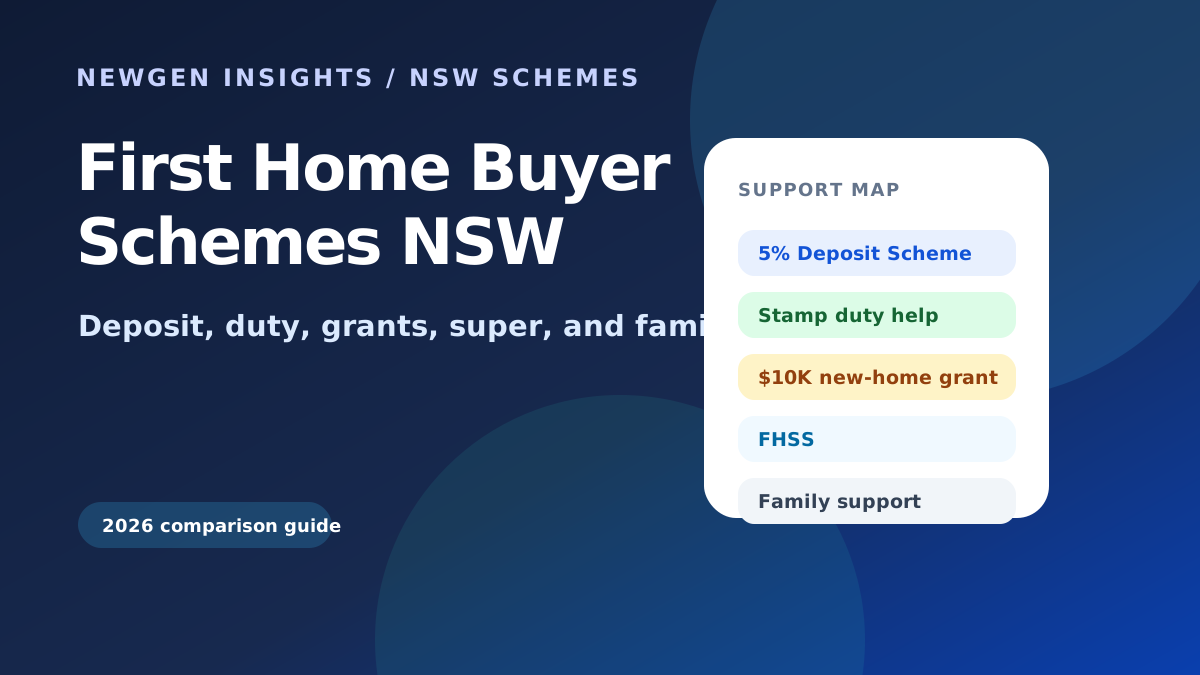
The main first home buyer schemes in NSW in 2026 are the federal 5% Deposit Scheme, the federal Help to Buy shared equity scheme, the NSW First Home Buyers Assistance Scheme for stamp duty, the NSW First Home Owner (New Homes) Grant of $10,000, and the First Home Super Saver Scheme. Family gifts and guarantor loans are not government schemes, but they often sit alongside them.
They do not all do the same job. The 5% Deposit Scheme removes LMI on a small deposit, stamp duty relief cuts your upfront costs, the grant only applies to new homes, and FHSS helps you save through super. The biggest change to know about is that since 1 October 2025 the 5% Deposit Scheme has no income caps and no limit on places, so many buyers who were previously excluded can now apply.
Start with your real bottleneck (deposit, LMI, duty or savings) and then test which schemes fit. Every scheme still sits behind normal lender approval, so the loan has to service on your income and expenses.
What are the first home buyer schemes in NSW in 2026?
These are the supports most NSW first home buyers compare:
- 5% Deposit Scheme (Australian Government, run by Housing Australia): buy with a 5% deposit and no LMI, or 2% for eligible single parents and legal guardians.
- Help to Buy (Australian Government): the government takes an equity share of up to 30% for existing homes or 40% for new homes, with a 2% minimum deposit.
- First Home Buyers Assistance Scheme (Revenue NSW): full transfer duty exemption up to $800,000 and a concession up to $1,000,000.
- First Home Owner (New Homes) Grant (Revenue NSW): $10,000 for eligible new homes.
- First Home Super Saver Scheme (ATO): save part of your deposit through voluntary super contributions.
- Family gift or guarantor support: not a scheme, but a common way to close a deposit gap.
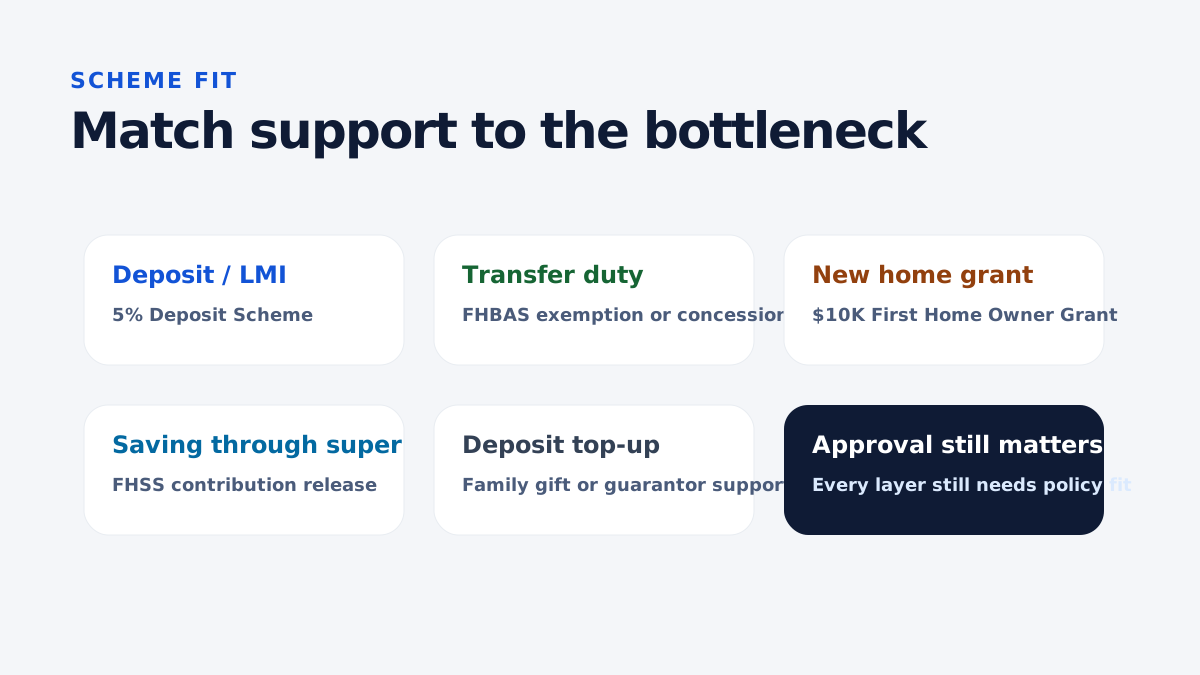
Which NSW first home buyer scheme fits your situation?
This table summarises each scheme as at October 2026. Figures come from the official sources linked in each section below.
| Scheme or support | Who it helps | Main benefit | Key condition |
|---|---|---|---|
| 5% Deposit Scheme | First home buyers with at least 5% saved | No LMI on a 5% deposit | Price caps ($1.5m Sydney and regional centres, $800k rest of NSW) and lender approval |
| 5% Deposit Scheme, single parent pathway | Single parents and legal guardians | Buy with a 2% deposit, no LMI | Same price caps and lender approval |
| Help to Buy | Buyers within the income caps | Government equity share of up to 30% (existing) or 40% (new) | Income caps of $103,000 single or $165,000 joint/single parent; 2% minimum deposit |
| First Home Buyers Assistance Scheme | Eligible NSW first home buyers | No transfer duty up to $800,000; concession up to $1,000,000 | Occupancy requirements, including moving in within 12 months |
| First Home Owner (New Homes) Grant | Buyers of eligible new homes | $10,000 grant | New homes up to $600,000, or house-and-land up to $750,000 |
| First Home Super Saver Scheme | Buyers saving over time | Concessional super contributions released for a deposit | Up to $15,000 per financial year, $50,000 total |
| Family gift | Buyers with family cash help | Tops up deposit or costs | Lender evidence and usually a gift letter |
| Guarantor loan | Buyers with family property support | May reduce the deposit needed or avoid LMI | Guarantor takes on real risk and should get advice |
How does the 5% Deposit Scheme work in NSW?
The 5% Deposit Scheme lets eligible first home buyers purchase with a minimum 5% deposit without paying Lenders Mortgage Insurance, through a participating lender. Single parents and legal guardians can buy with as little as 2%. Since 1 October 2025 there are no income caps and no limit on places (firsthomebuyers.gov.au, checked October 2026).
That makes it useful if you have solid income but have not had time to save 20%. It does not replace lender approval. The lender still checks:
- Income and employment.
- Debts and credit card limits.
- Living expenses and bank statement conduct.
- Property type and valuation.
- Whether the repayments are affordable at an assessment rate above the actual rate.
For a deeper walk-through of eligibility, read the 5% Deposit Scheme explained.
What are the 5% Deposit Scheme price caps in NSW?
The NSW property price caps are $1,500,000 for Sydney and regional centres and $800,000 for the rest of NSW. Both the purchase price and the lender’s valuation must be at or below the cap (property price caps, checked October 2026).
A contract price under the cap is not enough on its own. If the valuation comes in differently, the scheme position can change, so check the exact postcode with the official tool and your lender before you bid.
Who is the 5% Deposit Scheme a good fit for?
It tends to suit buyers who:
- Have at least the minimum deposit saved, plus money for costs.
- Want to avoid LMI.
- Are buying under the relevant price cap.
- Will live in the property.
- Can comfortably service a larger loan.
It may not suit buyers who are purchasing an investment property, are buying above the cap, or would be stretched by the bigger loan that a small deposit creates.
How does Help to Buy work in NSW?
Help to Buy is a shared equity scheme. The government contributes up to 30% of the price of an existing home or up to 40% of a new home, and you need a minimum 2% deposit. Income caps are $103,000 for singles and $165,000 for joint applicants and single parents (Help to Buy, checked October 2026).
Because the government owns a share, it also shares in changes in the property’s value when that share is repaid. There are ongoing eligibility reviews and repayment obligations, so read the scheme rules carefully. Help to Buy is generally an alternative to the 5% Deposit Scheme rather than something you use alongside it, although NSW stamp duty relief or the grant may still apply. Access is through participating lenders only.
How much stamp duty do first home buyers pay in NSW?
Eligible first home buyers pay no transfer duty on new or existing homes valued up to $800,000, and a concessional rate on homes up to $1,000,000. For vacant land you plan to build on, the exemption applies up to $350,000 and the concession up to $450,000. Occupancy requirements apply, including moving in within 12 months (Revenue NSW, checked October 2026).
Because of that occupancy rule, investment-first buyers should not assume duty relief applies. For worked examples around the $800,000 line, read the NSW first home buyer stamp duty guide.
Is there a first home buyer grant in NSW in 2026?
Yes, but only for new homes. The NSW First Home Owner (New Homes) Grant is $10,000 for eligible new homes valued up to $600,000, or house-and-land packages up to $750,000 (Revenue NSW, checked October 2026).
The common mistake is assuming every first home buyer gets the grant. If you buy an established home, you may still qualify for stamp duty relief, but the grant generally will not apply. And at Sydney prices, many new homes sit above the $600,000 cap.
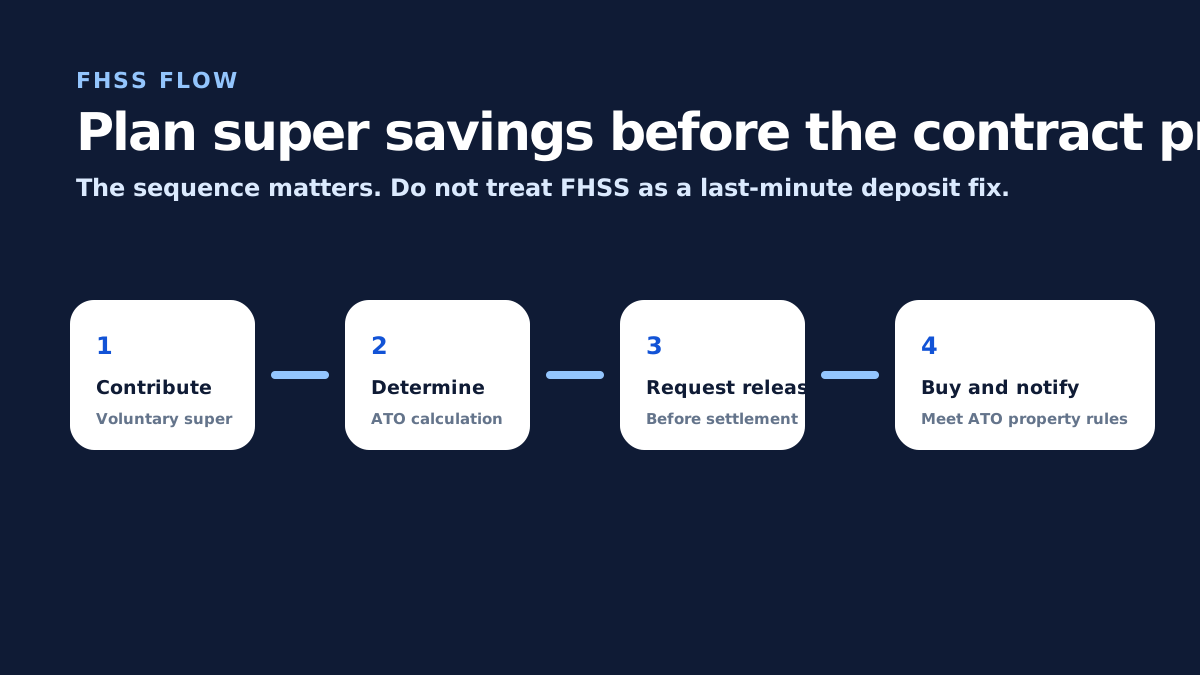
What is the First Home Super Saver Scheme?
FHSS lets you make voluntary contributions into super and later apply to release them, plus associated earnings, for a first home deposit. You can contribute up to $15,000 per financial year and have up to $50,000 in total released (ATO, checked October 2026).
FHSS is not a last-minute fix. The ATO sets an order of steps (determination, release, then purchase), and timing relative to signing a contract matters. Tax treatment is personal, so speak to your accountant or tax adviser before you rely on it.
Can family help with a first home deposit?
Yes, in two common ways. A family gift can top up your deposit or costs, but lenders usually want evidence and a gift letter confirming the money does not need to be repaid. A guarantor loan uses a family member’s property as extra security, which can reduce the deposit needed or avoid LMI.
A guarantor takes on real financial risk, so independent legal and financial advice is important before anyone signs (Moneysmart, checked October 2026).
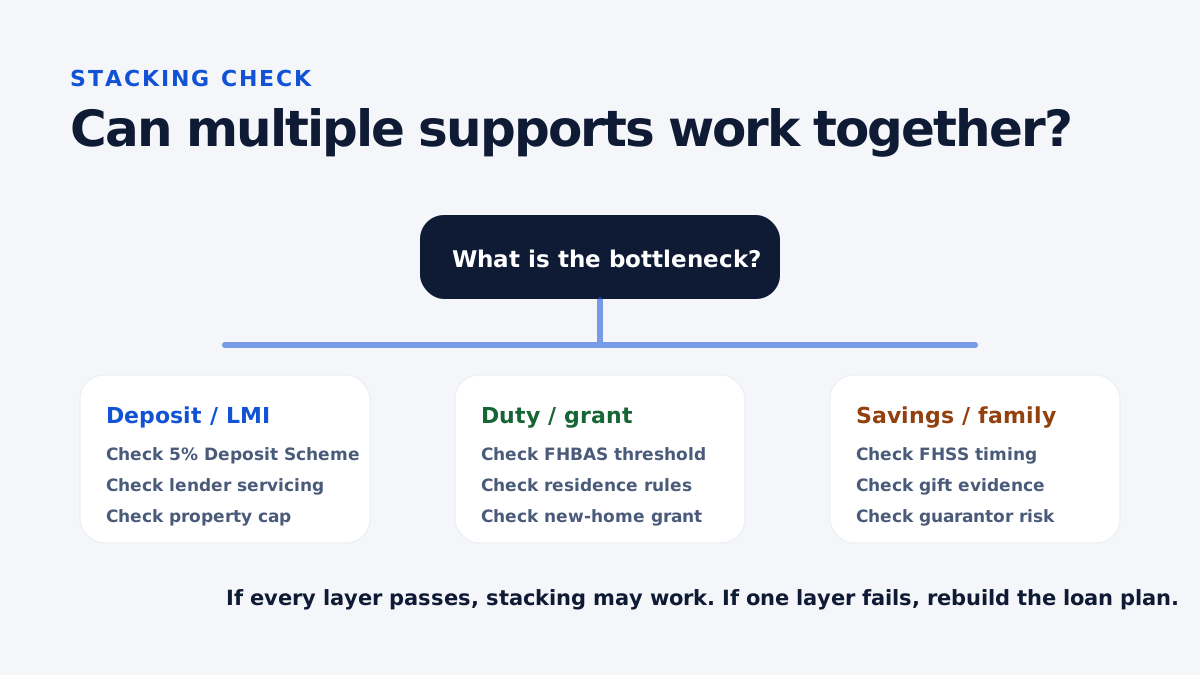
Can you stack first home buyer schemes in NSW?
Often, yes. An eligible buyer might combine:
- FHSS to build part of the deposit.
- The 5% Deposit Scheme to avoid LMI.
- The First Home Buyers Assistance Scheme to remove or reduce transfer duty.
- A family gift to cover costs.
Each layer has separate rules. A plan that works for one buyer can fail for another because of the purchase price, the property type, occupancy, lender participation or servicing.
Why do first home buyer scheme applications get delayed?
The property is above a cap
For the 5% Deposit Scheme, both the price and the valuation must fit under the cap. For duty relief, the $800,000 and $1,000,000 thresholds apply.
The buyer assumes the grant applies to established homes
The $10,000 grant is for eligible new homes only.
The deposit source is unclear
Gifts, cash transfers and sudden deposits need a clean paper trail.
Bank statements raise questions
Schemes do not switch off normal lender checks, so messy statements can slow or stop an application.
The lender is the wrong fit
Not every participating lender suits every borrower, particularly for casual, contract or self-employed income.
Where should 1st time home buyers in NSW start?
- Decide the goal: owner-occupied or investment, new or established, Sydney or regional NSW.
- Confirm your deposit amount, where it came from and how you will evidence it.
- Check which schemes you qualify for: 5% Deposit Scheme or Help to Buy, duty relief, the grant and FHSS.
- Check price caps and duty thresholds before you make an offer.
- Compare participating lenders on policy fit, not brand familiarity.
- Get pre-approval with the scheme built in, and keep your broker and conveyancer working from the same assumptions.
Our first home buyer loan checklist for NSW lists the documents lenders usually ask for, and the Sydney house deposit guide shows what 5%, 10% and 20% look like in dollars. You can also see how NewGen handles first home buyer loans. If you would like NewGen to check which supports fit your numbers before you apply, you can start an enquiry. Scheme access and loans are subject to eligibility and lender approval.