
The real deposit question is not “Do I have enough saved?”
It is this:
Do you have enough deposit, enough purchase-cost money, and the right lender policy for the way your funds were built?
That is where Sydney first-home buyers get caught. A buyer might have 10% saved and still be short once stamp duty, LMI, conveyancing, inspection costs, lender fees, moving costs, and a post-settlement buffer are included.
For a full first-home buyer pathway, start with the first home loan guide and the first home buyer service page. If stamp duty is the pressure point, read the NSW first home buyer stamp duty guide.
What counts as a house deposit?
Your deposit is the money you contribute toward the purchase price.
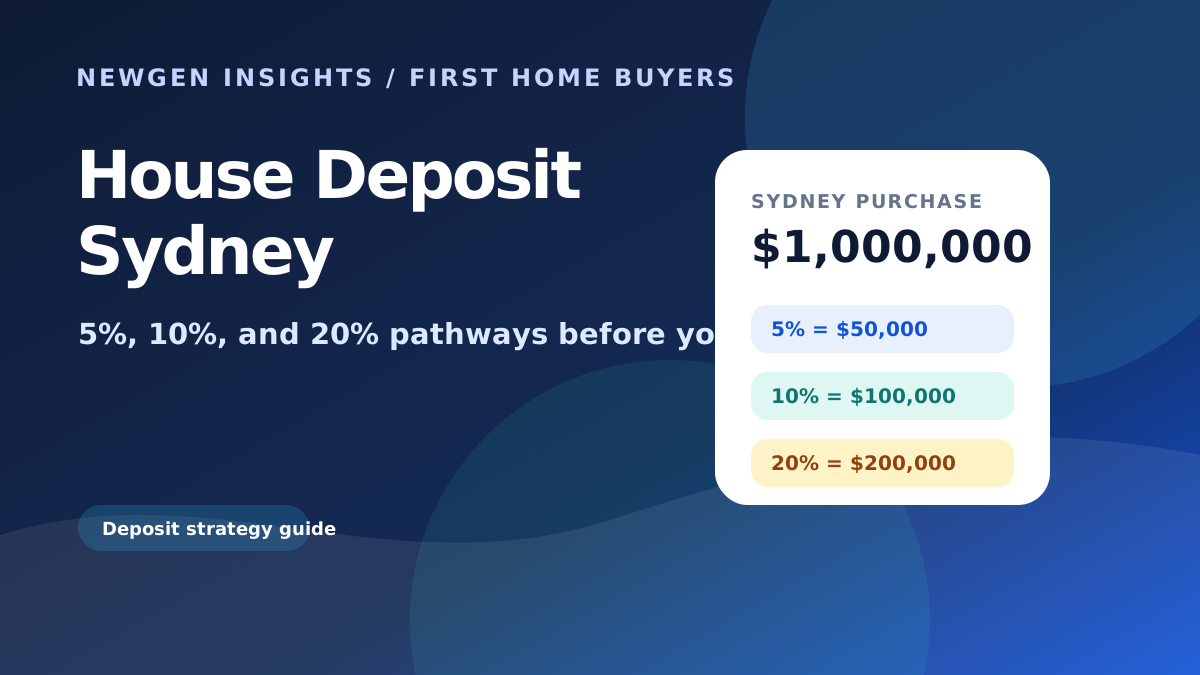
If you buy for $1,000,000 and contribute $100,000, that is a 10% deposit. If you contribute $200,000, that is a 20% deposit.
But lenders do not only assess the number. They also assess where the funds came from and whether the story is clean.
Common deposit sources include:
- Savings from salary or wages.
- A family gift.
- Funds released through the First Home Super Saver Scheme.
- Sale proceeds from a car, shares, or another asset.
- Inheritance.
- Bonus, overtime, or commission income.
- Equity support from a family guarantor structure.
5%, 10%, and 20% deposit explained
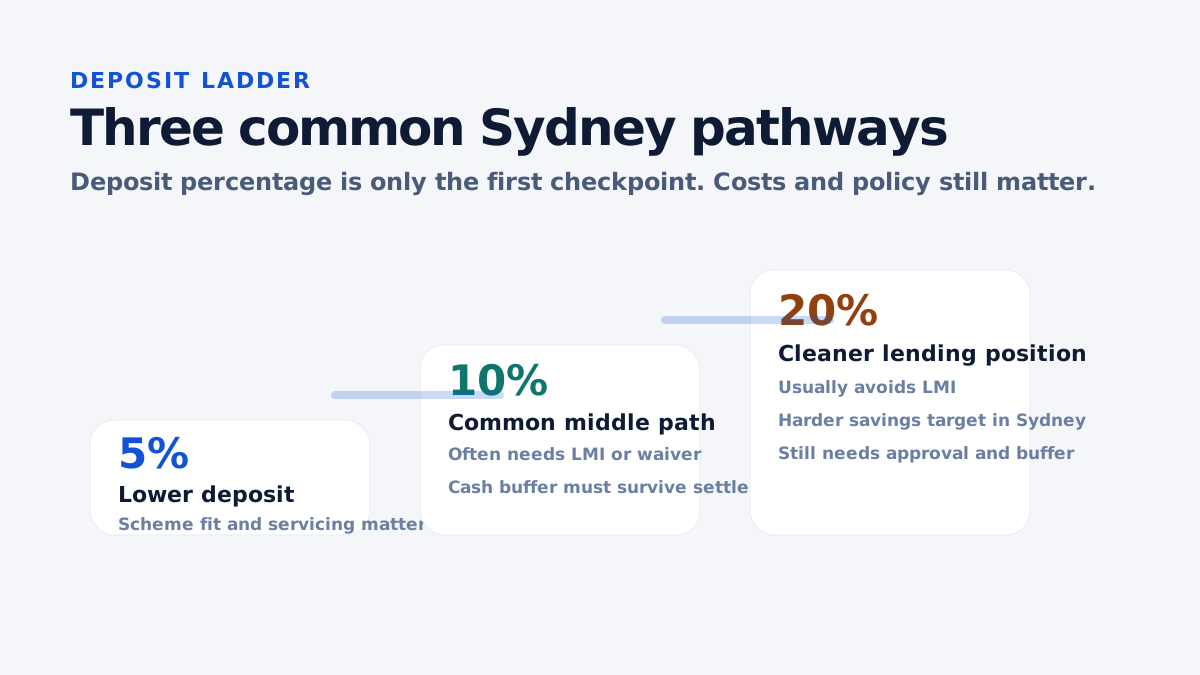
The three deposit numbers buyers hear most are 5%, 10%, and 20%.
None of them is automatically right.
5% deposit
A 5% deposit can be possible for eligible first home buyers under the Australian Government 5% Deposit Scheme. The official scheme page says the scheme is for first home buyers with a minimum 5% deposit and single parents or legal guardians with a minimum 2% deposit. It also states that from 1 October 2025 the scheme changed to no income caps, no waitlists, and no Lenders Mortgage Insurance for eligible buyers.
This can help buyers who have income but have not had enough time to save a large deposit.
But a 5% deposit is not a free pass. You are usually borrowing more, so repayments are higher and the lender still checks income, debts, spending, employment, credit conduct, and property fit.
10% deposit
A 10% deposit is common in Sydney because a 20% deposit can be hard to build.
On a $1,000,000 purchase, 10% is $100,000. That is already a serious savings effort, but it may still trigger LMI unless a waiver, guarantor structure, or scheme applies.
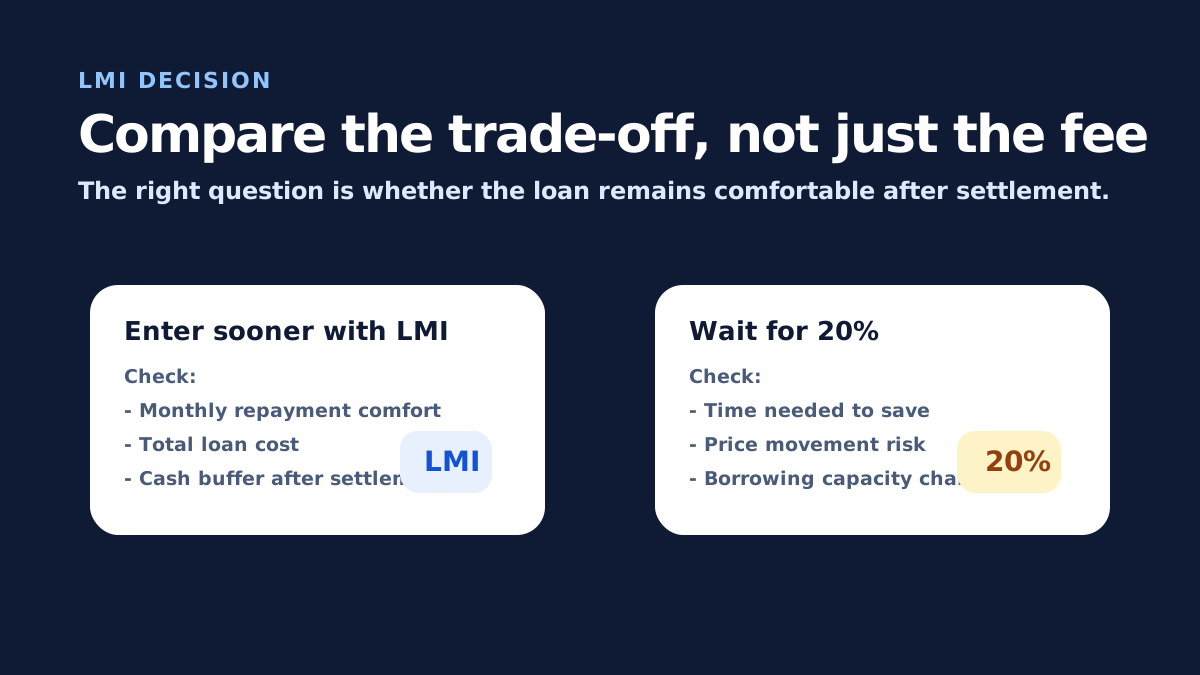
For some buyers, paying LMI can still be a rational decision if the loan is affordable and it helps them enter the market sooner. For others, it adds too much pressure.
The answer depends on the numbers.
20% deposit
A 20% deposit is the cleaner lending position because it usually avoids LMI.
The problem is the dollar amount. In Sydney, a 20% deposit can mean $200,000 on a $1,000,000 property or $300,000 on a $1,500,000 property.
That is why waiting for 20% is not always the best move. Sometimes the cost of waiting is larger than the cost of entering earlier. Sometimes it is not. You need the comparison.
Deposit examples for Sydney property prices
| Property price | 5% deposit | 10% deposit | 20% deposit |
|---|---|---|---|
| $700,000 | $35,000 | $70,000 | $140,000 |
| $800,000 | $40,000 | $80,000 | $160,000 |
| $1,000,000 | $50,000 | $100,000 | $200,000 |
| $1,200,000 | $60,000 | $120,000 | $240,000 |
| $1,500,000 | $75,000 | $150,000 | $300,000 |
This table only shows the deposit.
It does not include:
- Stamp duty.
- Lenders Mortgage Insurance.
- Conveyancer or solicitor costs.
- Building and pest inspections.
- Lender application or settlement fees.
- Moving costs.
- Home insurance.
- Cash buffer after settlement.
That is why buyers should model the full funds-to-complete number before making an offer.
Worked examples: $700K, $1M, and $1.5M
| Purchase price | Deposit option | Deposit amount | LMI position | Main pressure point |
|---|---|---|---|---|
| $700,000 | 5% | $35,000 | May be avoidable if eligible under the 5% Deposit Scheme | Servicing and purchase-cost buffer |
| $700,000 | 10% | $70,000 | Often likely unless a waiver or scheme applies | More upfront savings |
| $700,000 | 20% | $140,000 | Usually no LMI | Harder savings target |
| $1,000,000 | 5% | $50,000 | May be avoidable if scheme and lender rules are met | Larger repayments |
| $1,000,000 | 10% | $100,000 | Often likely | LMI and servicing |
| $1,000,000 | 20% | $200,000 | Usually no LMI | Large deposit requirement |
| $1,500,000 | 5% | $75,000 | Possible only if scheme, cap, and lender rules fit | Very high loan size |
| $1,500,000 | 10% | $150,000 | Often likely | Serviceability pressure |
| $1,500,000 | 20% | $300,000 | Usually no LMI | Huge savings requirement |
The current official price cap page for the Australian Government 5% Deposit Scheme lists NSW capital city and regional centres at $1,500,000 and other NSW areas at $800,000. It also says both the purchase price and the lender-assessed value must be at or below the cap.
Always check the exact postcode before relying on the cap.
What is LMI and why does it matter?
LMI stands for Lenders Mortgage Insurance.
It protects the lender, not the borrower. The borrower usually pays for it, but the cover is for the lender if the loan defaults and the lender suffers a loss.
LMI usually becomes relevant when the loan is above 80% of the property value. That means it can apply when the deposit is below 20%, unless a waiver, family guarantee, or government scheme changes the structure.
Can you buy in Sydney with a 5% deposit?
Yes, some buyers can.
The Australian Government 5% Deposit Scheme can allow eligible first home buyers to buy with a minimum 5% deposit and no LMI. The buyer still needs to meet scheme rules, property price cap rules, and the participating lender’s credit policy.
That last point matters.
A scheme does not approve the loan by itself. The lender still checks:
- Income.
- Employment history.
- Debts and credit limits.
- Living expenses.
- Bank conduct.
- Savings evidence.
- Property type.
- Repayment comfort.
If the loan does not service, the scheme does not fix that.
Can gifted deposits count?
Yes, gifted deposits can count with many lenders.
But the gift needs to be clean.
Most lenders will want evidence of the funds and may require a gift letter confirming the money is a genuine gift and does not need to be repaid. If the “gift” is really a loan from family, the lender may treat the repayment obligation as a liability.
That can reduce borrowing capacity.
What are genuine savings?
Genuine savings usually means money you have saved or held over time.
Different lenders treat this differently. Some want a three-month savings pattern. Some may accept rental history. Some may accept gifted funds if held for a set period. Some have sharper rules for higher-LVR loans.
This is why lender selection matters.
A buyer can look weak under one lender’s deposit policy and acceptable under another lender’s policy, even when the facts are the same.
Why bank statements matter
Before applying, clean up the behaviour in your bank statements.
Not cosmetically. Actually.
Lenders can review spending, transfers, debts, overdrafts, buy now pay later use, gambling, missed payments, and whether stated expenses match reality.
For at least three months before applying:
- Avoid gambling transactions.
- Avoid new personal loans or unnecessary credit.
- Reduce credit card limits where practical.
- Keep savings consistent.
- Make income easy to identify.
- Avoid unexplained transfers.
- Pay bills on time.
- Keep a cash buffer visible.
The bank can see the statements. It is better to prepare than explain.
Should you buy owner-occupied first or investment first?
Not every Sydney buyer should force an owner-occupied purchase straight away.
Some buyers cannot afford where they want to live. In that case, an investment-first strategy may be worth comparing. The idea is to buy a property that fits the borrowing position, rent it out, and potentially use future equity later.
That strategy has risks. Rental income, vacancy, rates, repairs, tax treatment, and loan structure all matter. It is not automatically smarter.
But it can be worth discussing if the alternative is stretching too hard for a home that does not suit your life.
Start with the investment loans page if you want to compare that path.
Common deposit mistakes Sydney buyers make
Mistake 1: Thinking the deposit is the only upfront cost
The deposit is only part of the funds-to-complete number.
Mistake 2: Waiting for 20% without comparing alternatives
Waiting can be wise. It can also cost time if prices or borrowing conditions move against you.
Mistake 3: Assuming every lender treats deposits the same way
Gifted funds, genuine savings, rent history, and family help are policy-sensitive.
Mistake 4: Not preparing bank statements
Messy statements create avoidable questions.
Mistake 5: Forgetting the post-settlement buffer
Settling with no cash left is not a strong position.
Next step
Before you chase a property, work out:
- Your realistic purchase range.
- Your full funds-to-complete number.
- Whether 5%, 10%, or 20% suits your profile.
- Which lender policy fits your deposit story.
Use the mortgage repayments calculator to test repayment comfort, then start an enquiry if you want NewGen to map the lender-fit path.