
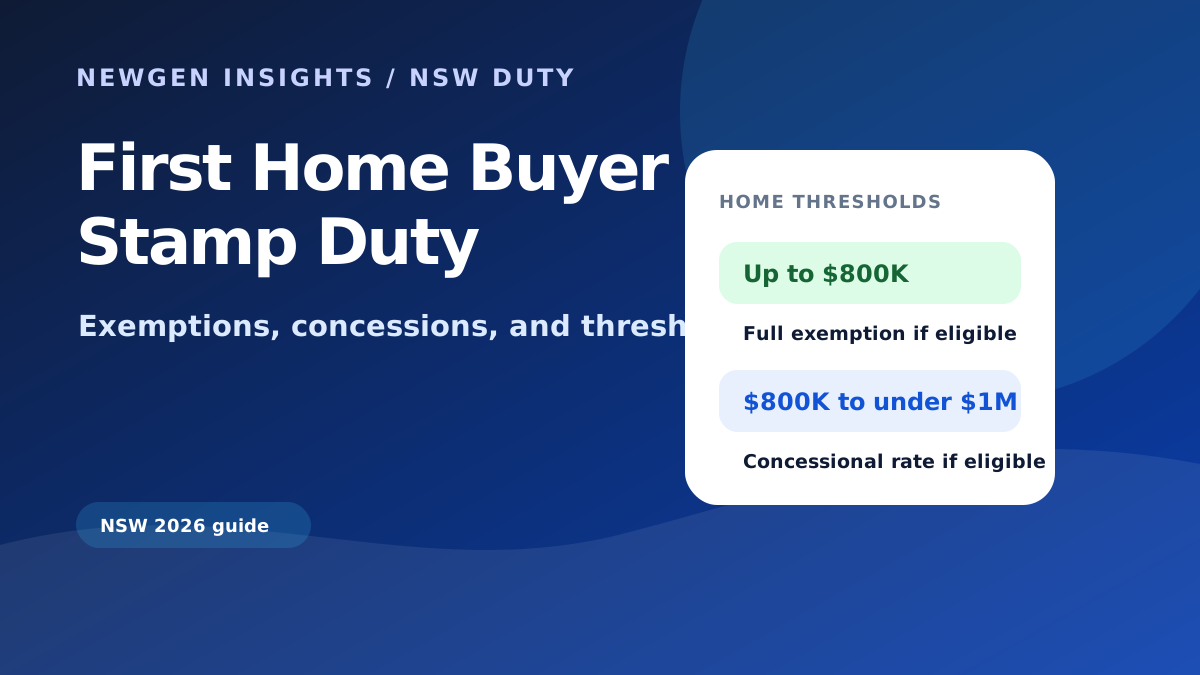
Stamp duty can change a first-home buyer plan in one line.
You might have the deposit. You might have the pre-approval. Then duty adds thousands of dollars to the funds needed at settlement.
That is why NSW stamp duty needs to be checked before you make an offer, not after.
This guide covers the current NSW first home buyer transfer duty thresholds, how the exemption and concession ranges work, and why the $800,000 line matters for Sydney buyers.
For the broader lending pathway, read the first home loan guide. If the deposit is the bigger issue, read the Sydney house deposit guide.
What is stamp duty?
Stamp duty is officially called transfer duty in NSW.
It is a state tax paid when property changes ownership. For first home buyers, NSW offers help through the First Home Buyers Assistance Scheme, often shortened to FHBAS.
Revenue NSW says first home buyers in NSW may be eligible for a full exemption or a reduced rate of transfer duty under the scheme.
That does not mean every first home buyer pays no duty.
It depends on:
- Property value.
- Property type.
- Whether it is a whole property transfer.
- Whether the buyer meets first-home buyer rules.
- Citizenship or permanent residency status.
- Residence requirements.
- Whether the buyer or their spouse has owned residential property before.
NSW first home buyer stamp duty thresholds in 2026
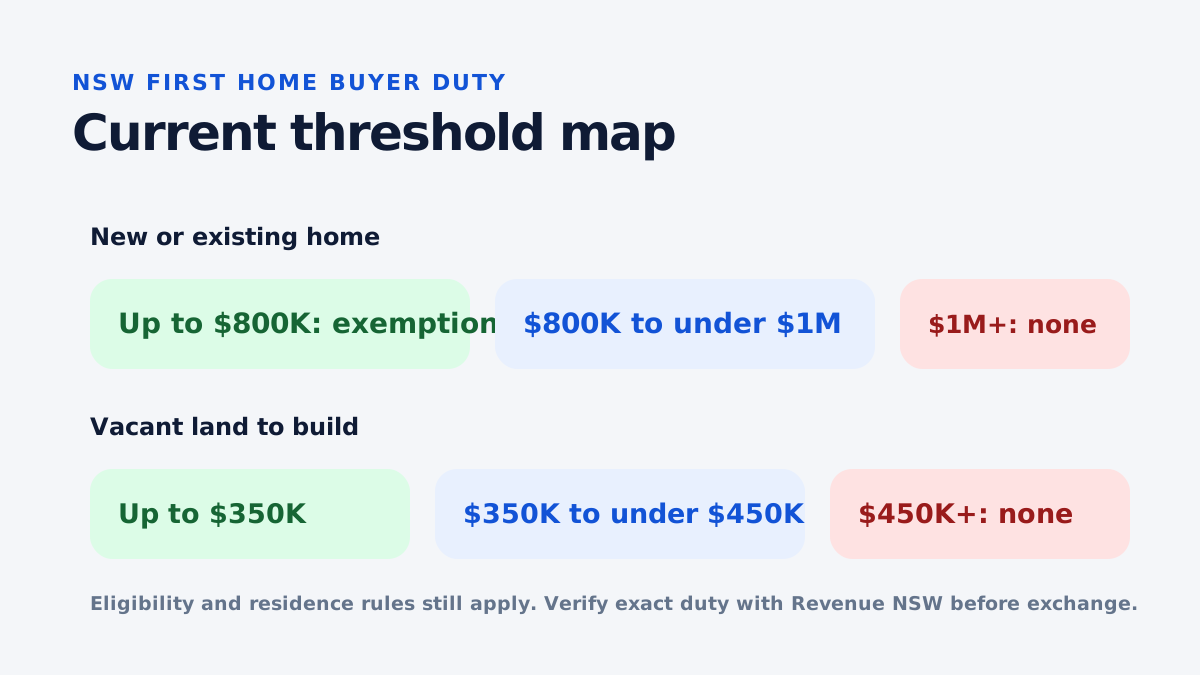
Revenue NSW currently states that from 1 July 2023, eligible first home buyers can receive a full exemption from transfer duty on new or existing homes valued up to $800,000. Homes valued over $800,000 and less than $1,000,000 may qualify for a concessional rate.
For vacant land on which you intend to build a home, Revenue NSW lists an exemption up to $350,000 and a concessional rate above $350,000 and less than $450,000.
| Property type | Value | First home buyer transfer duty outcome |
|---|---|---|
| New or existing home | Up to $800,000 | Full exemption if eligible |
| New or existing home | Over $800,000 and below $1,000,000 | Concessional rate if eligible |
| New or existing home | $1,000,000 or above | No FHBAS home concession under current thresholds |
| Vacant land | Up to $350,000 | Full exemption if eligible |
| Vacant land | Over $350,000 and below $450,000 | Concessional rate if eligible |
| Vacant land | $450,000 or above | No FHBAS vacant-land concession under current thresholds |
Who is eligible for the First Home Buyers Assistance Scheme?
Revenue NSW eligibility rules include several moving parts.
In plain English, the buyer generally needs to be a genuine first home buyer, purchasing an eligible NSW property within the relevant value threshold, and at least one buyer needs to be an Australian citizen or permanent resident.
Revenue NSW also says that for contracts exchanged on or after 1 July 2023, at least one eligible first home buyer must move into the home within 12 months after settlement and live there as their principal place of residence for at least 12 continuous months.
That residence rule is important.
If you are buying an investment property, do not assume stamp duty assistance applies. The owner-occupier requirement can change the entire answer.
Full exemption vs concession
A full exemption means no transfer duty is payable under the scheme.
A concession means transfer duty is reduced, not removed.
This distinction matters because buyers often think the rules are binary:
“Under the threshold, no stamp duty. Over the threshold, full stamp duty.”
That is not quite right. For eligible homes above $800,000 and below $1,000,000, a concessional rate may apply.
Once the home reaches $1,000,000 or more, the current FHBAS home concession generally does not apply.
Why the $800,000 threshold matters
The $800,000 threshold is a major planning point.
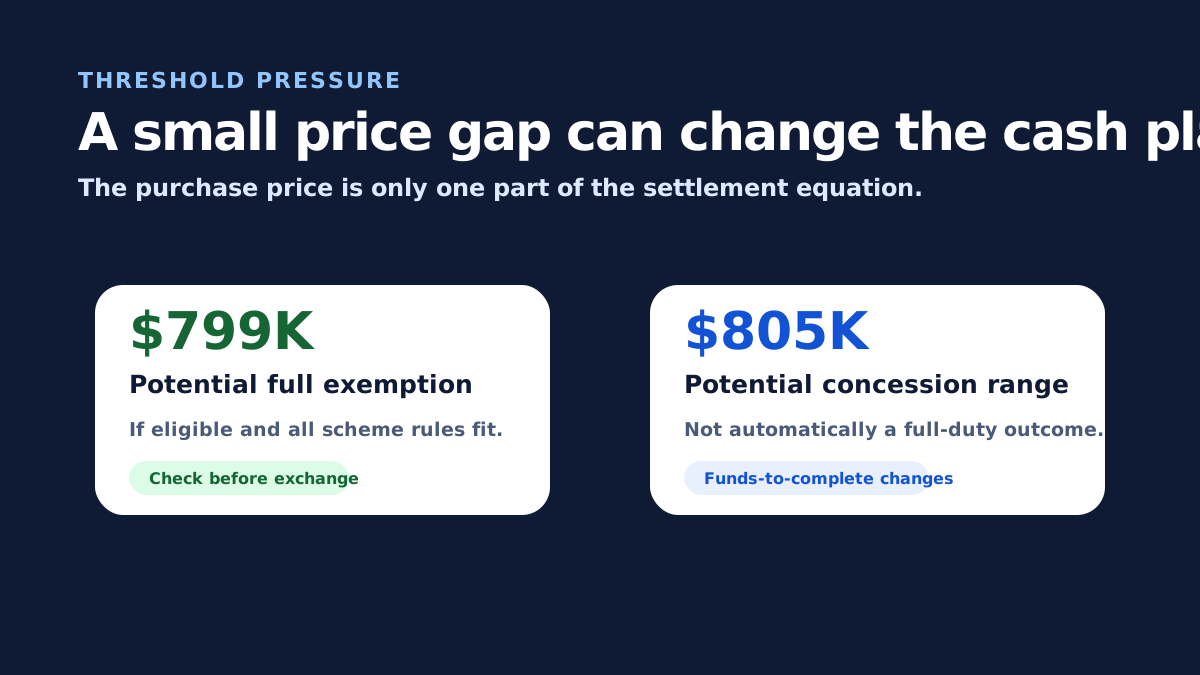
For an eligible first home buyer, buying at or below $800,000 may remove transfer duty under the scheme. Buying above it can still receive a concession if the price is below $1,000,000, but the funds-to-complete number changes.
That can affect:
- Deposit needed.
- Loan-to-value ratio.
- Whether LMI applies.
- Cash buffer after settlement.
- Whether family support is needed.
- Whether the buyer can bid confidently.
Worked examples: $650K, $800K, $1M, and $1.2M
The exact duty should be checked with the Revenue NSW calculator and your conveyancer before exchange.
| Purchase price | Current FHBAS outcome for an eligible home buyer |
|---|---|
| $650,000 | Likely full exemption if all eligibility rules are met |
| $800,000 | Likely full exemption if all eligibility rules are met |
| $900,000 | Potential concessional rate if all eligibility rules are met |
| $1,000,000 | Generally no FHBAS home concession because the concession applies below $1,000,000 |
| $1,200,000 | Generally no FHBAS home concession |
This is why first home buyers should not only ask, “What can I borrow?”
They should also ask, “What cash do I need to settle?”
New homes vs established homes
The First Home Buyers Assistance Scheme can apply to new or existing homes when the eligibility and value rules are met.
That is different from the NSW First Home Owner Grant.
The NSW Government says first home buyers who build a new home or purchase a brand new or substantially renovated property can receive a $10,000 grant. The same NSW page says the grant is only available for homes that no-one has lived in before and lists the relevant new-home price limits.
So a buyer might:
- Qualify for stamp duty assistance on an established home.
- Not qualify for the $10,000 First Home Owner Grant because the property is not new.
These are separate benefits.
How stamp duty interacts with your deposit
Stamp duty is part of the funds-to-complete calculation.
For example, a buyer might have:
- A 10% deposit.
- A clean savings history.
- Stable income.
- A property target.
But if they do not qualify for a full exemption, they may need more cash to settle.
That can force a change to the plan:
- Lower the purchase price.
- Add family gift support.
- Use a different lender.
- Capitalise LMI if allowed and suitable.
- Delay the purchase.
- Change from owner-occupied to a different strategy.
This is why broker, buyer, and conveyancer need to be aligned before the contract is signed.
Common stamp duty mistakes
Mistake 1: Assuming every first home buyer pays no duty
The scheme depends on eligibility and property value.
Mistake 2: Confusing the grant with duty assistance
The $10,000 First Home Owner Grant and FHBAS are different programs.
Mistake 3: Forgetting residence requirements
If the required residence period is not met, eligibility can be lost and Revenue NSW may require the correct duty payment plus interest or penalties.
Mistake 4: Buying just above a threshold without checking the cost
The extra purchase price may be only a few thousand dollars. The total cash impact may be larger.
Mistake 5: Letting old pre-approval numbers drive today’s decision
Borrowing capacity, interest rates, lender policy, and expenses can move. Check the current position before relying on old numbers.
Should you keep your purchase under $800,000?
Sometimes, yes.
If you are eligible and can buy a suitable property at or below $800,000, avoiding transfer duty may improve your position.
But do not buy a weak property just to save duty.
Still check:
- Location.
- Resale appeal.
- Strata costs.
- Building condition.
- Commute.
- Lifestyle fit.
- Long-term lending plan.
The duty saving helps only if the property and loan structure still make sense.
Next step
Before making an offer, confirm:
- The property value against the FHBAS threshold.
- Whether you meet first-home buyer eligibility.
- Whether you can meet the residence requirement.
- The full funds-to-complete number.
- Whether your lender and conveyancer have checked the same assumptions.
Use the stamp duty calculator as a first estimate, then verify the exact amount with Revenue NSW and your conveyancer before exchange.